Video shows Waymo vehicle attempting wrong-way entry onto downtown Houston HOV lane during early local rollout
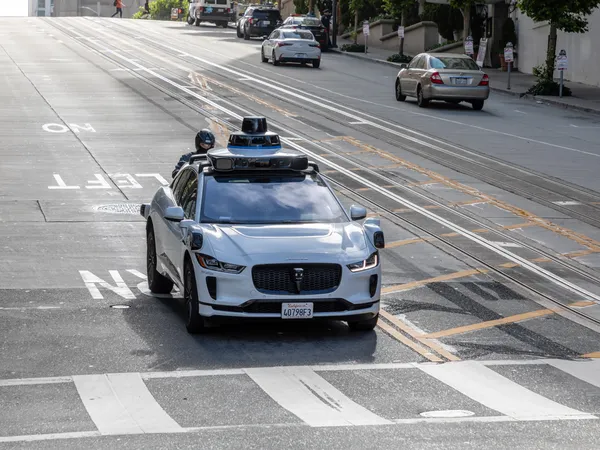
A brief incident captured on video raises operational questions for autonomous rides in Houston
A video circulating online shows a Waymo-branded autonomous vehicle attempting to enter a downtown Houston high-occupancy vehicle (HOV) lane in the wrong direction, before stopping and repositioning. The footage has drawn attention because it surfaced weeks after Waymo began offering limited-access autonomous rides in Houston as part of its broader U.S. expansion.
The video does not show a collision. It depicts a situation that could have created a hazard if oncoming traffic had been present in the lane at the time. The precise date, time, and exact location of the footage have not been independently established from the video alone.
What is known about Waymo’s current status in Houston
Waymo recently started dispatching autonomous vehicles in Houston under a limited-access model, with broader availability expected to expand over time. The Houston deployment is part of a four-city expansion announced on February 24, 2026, alongside Dallas, San Antonio, and Orlando.
Waymo has framed the new-market launches as a staged rollout, beginning with a restricted pool of riders before opening access more widely. The company has also emphasized its safety performance and its efforts to work with local stakeholders as it enters new operating environments.
Why HOV infrastructure can be challenging for navigation systems
Houston’s network includes separated HOV facilities, reversible segments in certain corridors, dedicated ramps, and complex access points that differ from standard freeway entrances. These features can increase routing complexity for any driver—and can also pose challenges for autonomous systems, which must interpret lane-level rules, signage, barriers, and timing restrictions in real time.
Dedicated access ramps and channelized lanes can narrow decision windows for safe merges and entries.
Directional and time-based restrictions can make a correct entry depend on both location and current operating status.
Downtown roadway geometry and lane markings can be dense and change with construction, events, or temporary traffic controls.
How incidents like this are typically evaluated
In autonomous-vehicle operations, video of anomalous behavior often triggers internal reviews that can include checks of the vehicle’s sensor interpretation, mapping data, routing logic, and decision-making at the moment of the event. Where warranted, companies may update mapping, adjust software behavior for a specific roadway feature, or add operational constraints—such as avoiding a particular access point—until the system is validated.
Autonomous driving systems are expected to prioritize safe outcomes—such as stopping—when encountering uncertainty or conflicting inputs.
What happens next
The video has intensified local scrutiny of how autonomous vehicles handle Houston-specific road designs. As Waymo’s limited-access program continues, transportation observers will be watching for additional data points: whether similar lane-entry errors recur, how quickly they are addressed, and what operational safeguards are added as the service expands to more riders and more parts of the city.