Venezuela opposition leader María Corina Machado courts Houston oil and gas executives amid shifting political outlook
A Houston-facing message built around investment, governance and energy policy
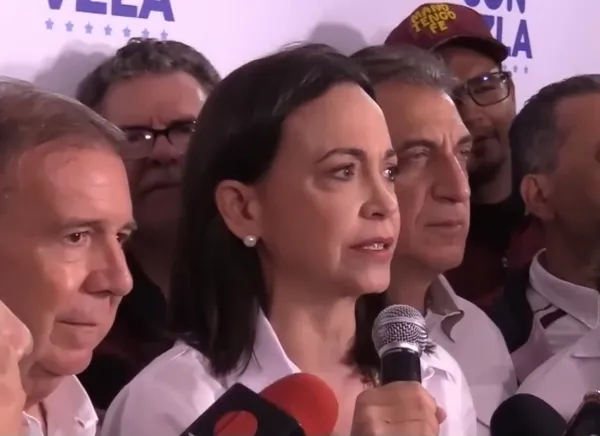
Venezuelan opposition leader María Corina Machado has addressed an audience of oil and gas executives in Houston, using the industry hub as a platform to outline how her movement says it would approach energy policy, investment conditions and state governance if it were to gain power in Caracas. The appearance underscored the degree to which Venezuela’s political contest remains intertwined with the country’s petroleum sector and with external stakeholders that have long tracked its production capacity, contract structures and sanctions environment.
Machado, a longtime figure in Venezuela’s opposition politics, has repeatedly positioned private investment and institutional reform as central elements of her program. Her outreach to Houston’s energy community placed that agenda before executives and service firms that operate across Latin America and that closely monitor the terms under which projects can be financed, insured and developed.
Venezuela’s oil sector: central asset, constrained operations
Venezuela holds some of the world’s largest proven oil reserves and significant natural gas resources. In practice, output and export capacity have been shaped by years of underinvestment, operational deterioration, changing legal frameworks and the impact of U.S. and other international sanctions. The state-owned company Petróleos de Venezuela (PDVSA) remains the dominant actor, while joint ventures and service agreements have historically been used to bring in foreign partners under varying levels of state control.
For energy companies and investors, the core questions typically revolve around stability of property rights, enforceability of contracts, repatriation of earnings, access to international banking channels, and the legal status of any future licenses or exemptions under sanctions regimes. Those factors help determine whether capital can return at scale, even if Venezuela’s subsurface potential is widely recognized.
Why Houston matters in a Venezuela policy recalibration
Houston is a global center for upstream expertise, oilfield services, trading, and project finance. It also hosts major operators with experience in heavy crude, upgrading, and complex production systems—capabilities that are particularly relevant to Venezuela’s Orinoco Belt resources. By speaking directly to executives in Houston, Machado signaled that any future political transition her movement seeks would prioritize rebuilding commercial credibility with the international energy industry.
Operational rehabilitation: restoring fields, pipelines, terminals and upgrading capacity requires multi-year capital programs.
Regulatory predictability: investors typically look for clear fiscal terms, independent dispute resolution and consistent rules.
Sanctions and compliance: companies weigh legal exposure, licensing constraints and counterparty risk.
Political context and near-term constraints
Machado’s engagement with U.S.-based energy audiences comes as Venezuela’s internal power structure remains contested and the country’s international relationships continue to shift. Even if political circumstances change, rebuilding the oil and gas sector would likely be gradual, given the technical complexity of restoring production, the need for credible governance, and the challenge of securing financing under evolving geopolitical conditions.
Any large-scale reentry of international capital into Venezuela’s energy sector would depend on enforceable legal protections, stable institutions, and clear pathways for compliant trade and investment.
In Houston, Machado’s message effectively placed those conditions—rather than production targets alone—at the center of the discussion with executives whose decisions can influence whether Venezuela’s resources translate into sustained output and revenues.