United Express flight returning to Houston after smoking battery prompts emergency declaration and FAA investigation
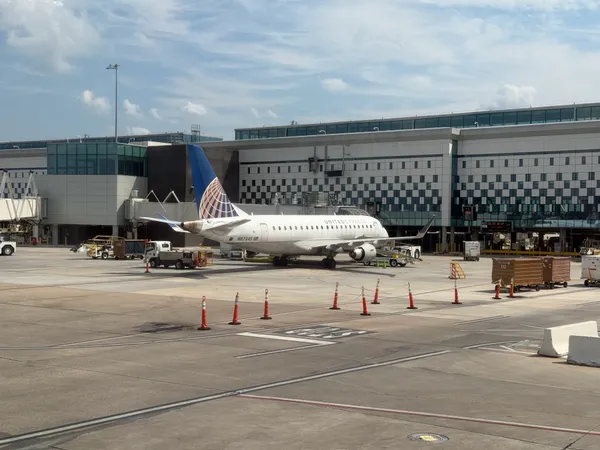
Emergency return to Bush Intercontinental after smoke report
A United Express regional jet returned to George Bush Intercontinental Airport in Houston after the crew reported smoke and electrical issues and declared an emergency. The incident involved United Express Flight 4969, operated by regional carrier CommuteAir, flying from Houston toward Panama City, Florida.
The aircraft landed safely back in Houston shortly after departure. No injuries were reported in initial public statements tied to the event, and federal authorities opened an investigation to determine the cause and sequence of events that led to the emergency return.
What is known about the reported battery smoke
Publicly available incident summaries describe smoke and electrical problems reported by the crew, with subsequent reporting indicating that a battery began smoking on board. In aviation incidents, smoke reports can involve a range of potential sources, including portable lithium-ion devices carried by passengers, aircraft-installed batteries, or other electrical components. Investigators typically determine whether the smoke originated from a consumer device, an aircraft system, or a different source altogether.
The event underscores a recurring operational challenge for airlines: smoke in the cockpit or cabin is treated as an urgent safety condition because it can impair visibility, indicate an active fire, or signal a developing electrical fault. Standard procedures prioritize rapid assessment, communication with air traffic control, and landing at the nearest suitable airport when conditions warrant.
How investigations typically proceed
In cases involving smoke or suspected battery thermal events, investigators generally gather flight crew reports, maintenance records, aircraft system messages, and any physical evidence recovered from the aircraft. If a passenger device is implicated, investigators may also review where the item was stored, whether it was charging, and whether it showed signs of damage or overheating.
Federal review can include coordination among aviation safety personnel, the airline, and the operator responsible for the aircraft’s maintenance and day-to-day operation. Findings may lead to maintenance actions, procedural updates, or passenger-handling guidance for electronic devices and portable chargers.
Passenger electronics remain a focus area for carriers
Lithium battery incidents are a documented safety concern across commercial aviation. When a device battery overheats or short-circuits, it can produce smoke, high heat, and, in some cases, open flame. Cabin crews are trained to respond with extinguishers and containment procedures designed to cool the device and prevent re-ignition.
- Airline and crew procedures emphasize prompt identification of the source of smoke.
- Cabin response may involve isolating and cooling an overheating device when it can be safely handled.
- Flight crews may return or divert as a precaution depending on smoke conditions and system indications.
The FAA investigation is expected to focus on the origin of the smoke report, the aircraft’s electrical indications, and how the event was managed from detection through landing.
CommuteAir operates regional flights under the United Express brand, and Houston is one of its major operating hubs. The outcome of the investigation will determine whether the incident stemmed from a passenger-carried device, an aircraft component, or another source of smoke and electrical anomalies.