Rice University’s Kinder Institute receives $55 million Kinder Foundation grant to expand Houston-focused urban research capacity
Major endowment boost and near-term funding
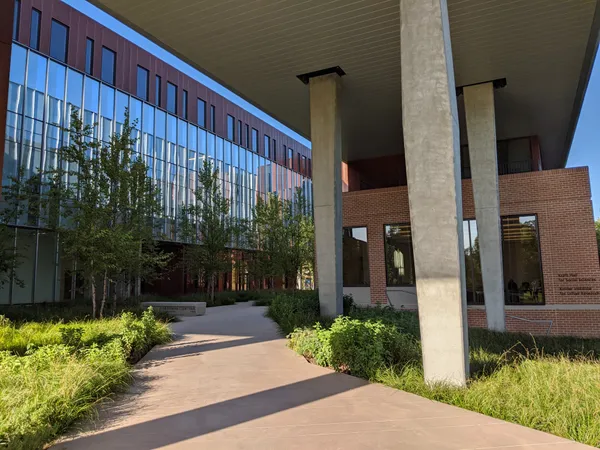
Rice University’s Kinder Institute for Urban Research has received a $55 million grant from the Kinder Foundation, a commitment the university said is designed to strengthen the institute’s long-term stability while accelerating work on urgent regional needs. The grant includes $50 million restricted for the institute’s endowment and $5 million designated for immediate research and program activities focused on Houston.
The award follows a $50 million endowment grant made in September 2022 and adds to earlier Kinder Foundation support that Rice says totals roughly $30 million prior to 2022 for the institute, related affiliates and the building that houses the institute. With the latest commitment, Rice reports the foundation’s giving connected to the institute over the past two decades surpasses $135 million.
What the institute studies, and how it is structured
Founded in 2010, the Kinder Institute describes its mission as producing data-driven research and partnering with public and civic organizations to inform policy and service delivery. Rice states the institute’s work concentrates on intersecting issues that shape daily life and long-term opportunity in the Houston region, including housing, education, economic mobility, health and population change.
Research initiatives are organized through five centers:
- Center for Community and Public Health
- Center for Housing and Neighborhoods
- Center for Economic Mobility
- Houston Education Research Consortium
- Houston Population Research Center
Partnership model and stated public purpose
Rice characterizes the Kinder Institute’s approach as a research-practice partnership model, in which studies are developed jointly with long-term partners such as government agencies and social service organizations. University leadership and institute officials have said endowment growth is intended to help maintain independence and enable the institute to work with partners regardless of whether those partners can pay for research support.
Rice also said the additional endowment resources are meant to improve the institute’s ability to respond quickly when community research needs arise during crises such as severe storms or public health emergencies, when there may be limited time to raise funds before decisions are required.
Examples of work cited by Rice
Rice points to multiple areas where institute research has been used to inform public discussion and decision-making in the Houston region. The university said researchers have contributed analysis related to the city’s multi-billion-dollar pension liability, developed partnerships with the Houston Independent School District and other districts to support educational outcomes, and expanded regional survey capacity through platforms such as the Greater Houston Community Panel covering Harris, Fort Bend and Montgomery counties.
The institute’s long-running Houston-area public opinion polling and other survey tools have been positioned by Rice as a way to track changing attitudes and experiences in one of the nation’s largest and most diverse metro areas.
Institutional growth and recent projects
Rice said the institute has more than doubled its staff over the past five years. The university highlighted recent Houston-focused work including a study of parks and greenspace conducted with philanthropic partners, reports assessing HISD classrooms and services tied to an initiative described as the Equity Project, a study examining college and workforce outcomes for Houston-area graduates, and a multiyear, multilingual study revisiting the region’s Asian American communities.
With the new funding, Rice and the Kinder Institute have indicated the institute will continue pursuing additional support for longer-term projects while using the expanded endowment and immediate funds to increase the pace and responsiveness of locally focused research.

Funeral service set for Friday in Houston for Fort Bend County Deputy Kenneth Lewis
Houston airports project 2.2 million spring break travelers as international terminal upgrades face first test
Houston agents intercept over 200 pounds of meth concealed in rope spools shipped from Mexico