Prime suspect in Texas Killing Fields case dies at 72, leaving decades-old murders unresolved
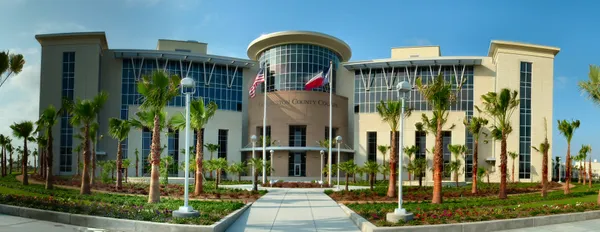
A long-running set of investigations along the I-45 corridor
A man widely regarded by investigators and victim advocates as a leading suspect in the murders associated with the so-called “Texas Killing Fields” has died at age 72, closing a chapter in a case that has remained unresolved for decades.
The term “Texas Killing Fields” is commonly used to describe a stretch of the Interstate 45 corridor between Houston and Galveston where multiple bodies—many of them young women—have been found since the 1970s. Law enforcement agencies have long maintained that the broader collection of cases may involve more than one offender, and that not all deaths share the same circumstances or evidentiary profile.
The Calder Road field and the best-documented cluster
One of the most closely examined clusters centers on a remote, wooded property off Calder Road in League City. Between the 1980s and early 1990s, four bodies were discovered in that area, and the cases drew sustained attention because of their geographic concentration and the difficulty investigators faced in determining who was responsible.
Those four victims were identified as Heidi Fye, Laura Miller, Audrey Lee Cook, and Donna Gonsoulin Prudhomme. Two of the women were identified relatively soon after discovery, while the other two remained unidentified for decades until advances in forensic science allowed for confirmation of their identities.
The suspect’s legal history and investigative focus
The man who died at 72 had not been convicted in connection with the Killing Fields murders. However, he had been investigated for years in relation to the Calder Road cases and remained a named suspect in several of the deaths.
His criminal record included a conviction for involuntary manslaughter in a separate case involving the death of Ellen Rae Beason. In that matter, the circumstances of Beason’s death were revisited years after her body was found, and the case ultimately resulted in a prison sentence. He was later released under mandatory supervision rules that governed certain Texas sentences at the time, and his post-release conditions drew scrutiny from local officials and victim advocates.
What the death changes—and what it does not
The suspect’s death does not resolve the underlying cases. Without a trial addressing the Killing Fields allegations, key questions remain about timelines, victim movements, forensic findings, and whether one person or multiple people committed the crimes in the region.
For investigators, unresolved homicide cases can remain open regardless of a suspect’s death, particularly when physical evidence, witness statements, or unidentified associates may still provide investigative leads.
Key facts about the Texas Killing Fields investigations
- Multiple agencies have worked the cases over decades, including local departments and federal investigators.
- The I-45 corridor includes numerous cases across different years and jurisdictions, not all of which are confirmed to be connected.
- The Calder Road site in League City produced a concentrated set of discoveries that became central to public attention and ongoing investigative efforts.
The deaths associated with the “Texas Killing Fields” span decades, jurisdictions, and investigative theories, leaving several families still seeking definitive answers.
Authorities have continued to encourage anyone with credible information about the Calder Road murders and related cases to come forward, emphasizing that even long-delayed details can be significant when re-examined alongside modern forensic capabilities.