NASA starts contract planning for a potential move of Space Shuttle Discovery to Houston
Contracting activity signals early-stage groundwork, not a final relocation decision
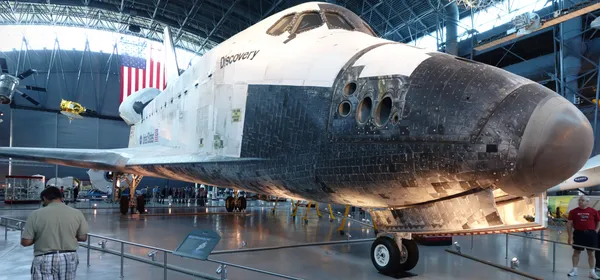
NASA has initiated contracting steps that could support a potential relocation of Space Shuttle Discovery to the Houston area, a move that would mark a major shift for an orbiter that has been on public display in Northern Virginia since 2012. The agency’s contracting activity does not itself confirm that the spacecraft will be transferred, but it indicates preparations that would be required if the relocation proceeds.
The contracting work comes amid an ongoing policy and funding debate over whether Discovery should remain in the national collection where it is currently exhibited or be transferred to a nonprofit entity near NASA’s Johnson Space Center (JSC). Houston-area advocates argue the region’s central role in human spaceflight operations makes it an appropriate venue for a shuttle orbiter, while opponents warn that moving a decades-old spacecraft carries technical, conservation, and cost risks.
What the current legal and policy discussion centers on
The relocation effort has been driven by federal legislative language introduced during the 119th Congress (2025–2026) that would direct NASA to transfer title of Discovery and subsequently convey it to a designated nonprofit on the condition it be displayed within a limited distance of JSC. Separate correspondence from members of Congress has urged appropriators to block or pause any relocation funding, emphasizing preservation concerns and arguing that the move could permanently diminish the artifact’s museum value.
As of March 20, 2026, the policy dispute remains unresolved in the public record. The Smithsonian has publicly maintained that moving Discovery would require disassembly, a claim that has become a focal point of the controversy because disassembly could affect the structural integrity and historical preservation of the orbiter.
Why contracting matters: engineering, transport, and facilities
Any relocation would require specialized engineering analysis, artifact handling plans, and site readiness work in Houston, including construction or modification of a climate-controlled structure capable of long-term preservation and public exhibition. Unlike the ferry flights that helped move shuttles in 2012, the dedicated carrier aircraft used at the time are no longer part of routine NASA operations, narrowing feasible transport options and elevating planning complexity.
NASA’s contracting actions may also reflect the need to define scope and responsibilities across multiple workstreams, including:
- Condition assessment and documentation of Discovery before movement
- Engineering determination of whether the orbiter can be transported intact or must be partially disassembled
- Development of cradles, fixtures, and handling procedures for safe lifting and stabilization
- Route surveys and logistics planning for long-distance ground and/or multimodal transport
- Design and construction planning for a compliant exhibit facility near JSC
What happens next
NASA’s next steps typically include defining technical requirements, identifying qualified vendors, and establishing procurement pathways for construction and specialized transport services. A final decision would still depend on legal authority, funding availability, technical feasibility, and agreements among the federal entities and any designated nonprofit operator in the Houston area.
At this stage, the contracting process is best understood as operational planning for a possibility, not confirmation that Discovery will move.
For Houston, the development is significant: it places the region’s long-running effort to host a shuttle orbiter into an execution-focused phase, even as the national debate over preservation, ownership, and cost continues.