NASA Skyfall database logs Texas fireball near Houston; here is how meteorite searches work on the ground
A daylight fireball over Southeast Texas
A bright daylight fireball reported across parts of Texas on Saturday, March 21, 2026, has drawn attention from would-be meteorite hunters in the Houston area. NASA’s Skyfall database lists a Texas event on March 21, 2026 at 21:40 UTC (4:40 p.m. Central), indicating the agency has cataloged the occurrence as a notable fireball report.
While a meteor is the light phenomenon produced as a space rock burns in the atmosphere, the term meteorite applies only if fragments survive to reach the ground. Many dramatic fireballs do not result in recoverable pieces, and confirmation typically depends on a mix of observational reports and instrument data.
What NASA data can and cannot tell the public
For some events, NASA’s meteorite-fall resources can publish a mapped “strewn field,” the expected area where fragments may have landed, derived from atmospheric flight behavior and, when available, supporting measurements. The same NASA resources also emphasize that a successful search depends on narrowing the probable landing zone and then conducting systematic ground checks.
As of publication, publicly visible NASA pages show the Texas fireball’s listing in the Skyfall database, but they do not, by themselves, provide a publicly posted street-level map for the March 21 Houston-area event. In practice, that means there may be no official, publicly released search box yet—or the analysis may still be in progress.
How strewn-field searching typically works
When a strewn field is available for an event, meteorite recovery efforts generally focus on the downrange corridor where heavier fragments are expected to fall farther along the path and lighter pieces can land earlier, often scattered by winds. Searchers usually prioritize open, accessible terrain where dark, freshly fallen stones contrast against soil or short grass.
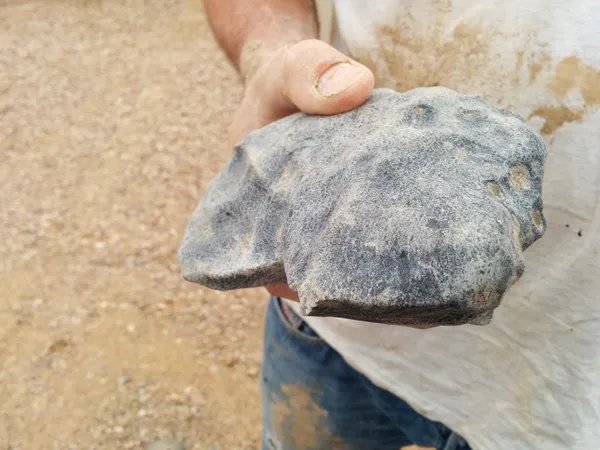
Look for fresh, dark rocks with a thin fusion crust and shapes that can appear smoothed or rounded from atmospheric heating.
Document the location precisely before moving anything; the find context can be scientifically valuable.
Handle suspected meteorites carefully to avoid contamination, especially if the specimen is fragile or weathered.
Meteorite recovery is most successful when potential fragments are documented in place, photographed, and linked to accurate location data before collection.
Practical constraints: access, safety, and verification
Any search around Houston would be constrained by private-property boundaries, dense development, and vegetated areas that reduce visibility on the ground. Even when a likely fall zone exists, meteorites can be small, partially buried, or mistaken for common terrestrial rocks.
Verification typically requires comparison against known meteorite characteristics and, for definitive classification, laboratory analysis. For the public, the most reliable next step is to wait for an official, publicly posted search area tied to the March 21 event—if one is issued—then conduct any activity legally, with landowner permission and careful documentation.
Until a specific, mapped landing zone is made public for this event, claims that fragments are definitely recoverable in a particular Houston-area neighborhood remain unconfirmed.