Houston Cybertruck Driver Sues Tesla After Alleged Autopilot Overpass Crash, Raising Safety and Liability Questions
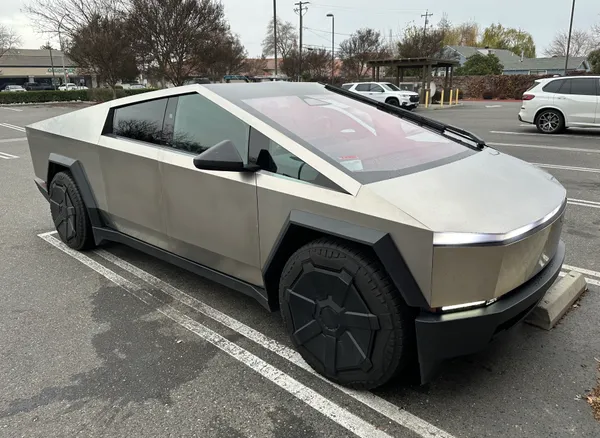
Lawsuit centers on August 2025 crash on I-69 interchange
A Houston-area driver has filed a civil lawsuit against Tesla seeking more than $1 million in damages after a crash involving a Tesla Cybertruck that was allegedly operating on the company’s Autopilot driver-assistance system. The case adds to a growing body of litigation and regulatory scrutiny surrounding how advanced driver-assistance features perform in complex roadway environments and how they are marketed to consumers.
The complaint describes an incident on Interstate 69 (the Eastex Freeway) at a Y-shaped overpass near the interchange to the 256 Eastex Park and Ride. The driver alleges that while the vehicle was in Autopilot, it failed to follow the roadway’s rightward curve and instead continued straight into a concrete barrier. The suit states the driver attempted to disengage the system and take control but was unable to avoid impact in time, resulting in injuries and other damages.
Claims focus on design, warnings, and foreseeable roadway scenarios
The suit accuses Tesla of negligence tied to the alleged behavior of the driver-assistance system in a location where lane guidance must interpret a split and curvature. Such interchanges can present difficult “path prediction” demands for driver-assistance software because lane markings, barriers, and merging geometry can change rapidly over short distances.
While the lawsuit will be adjudicated on evidence presented in court, it is likely to focus on issues commonly central to automated-driving cases, including how the system is designed to respond to roadway splits, what warnings and instructions were provided to the driver, and what Tesla represented the system could do under real-world conditions.
- Where and how Autopilot is intended to be used, including limitations described in owner-facing materials.
- Whether the system provided adequate cues for driver supervision or takeover in time to avoid a collision.
- Whether the roadway geometry should be treated as a foreseeable scenario requiring additional safeguards.
Regulatory backdrop: federal crash reporting and ongoing investigations
The lawsuit unfolds amid continued federal oversight of advanced driver-assistance and automated driving technologies. In the United States, manufacturers are required to submit certain crash reports involving vehicles equipped with automated driving systems or SAE Level 2 advanced driver-assistance systems under a federal standing reporting order. Separately, Tesla has faced multi-year scrutiny related to Autopilot and Full Self-Driving (Supervised), including federal inquiries into system performance, reporting practices, and the effectiveness of remedies delivered via software updates.
Why this case matters beyond one crash
Cybertruck-related litigation in the Houston region has drawn attention because it places a new vehicle platform into the same broader debate that has surrounded driver-assistance features for years: how responsibility is shared between human drivers who must remain attentive and systems that can control steering and speed in limited conditions. The Houston lawsuit is poised to test how courts evaluate claims about system capability, driver expectations, and duty of care when a crash occurs at a roadway split where the “correct” path requires a deliberate curve rather than a straight trajectory.
Autopilot is classified as a driver-assistance feature, not a fully autonomous system; legal disputes often hinge on system limits, driver supervision, and the timing of takeover opportunities.