Houston Cybertruck crash lawsuit challenges Tesla Autopilot marketing and safety claims after August 2025 overpass collision
Lawsuit filed in Harris County over Houston-area crash
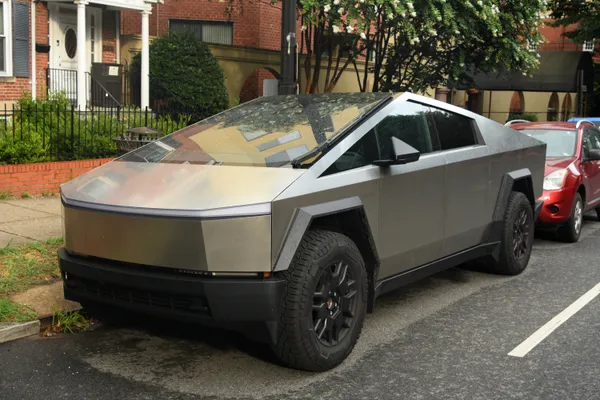
A Houston-area crash involving a Tesla Cybertruck has become the focus of a newly filed civil lawsuit that disputes how Tesla’s driver-assistance features are presented to consumers and how they perform in complex roadway conditions.
The suit was filed in late February 2026 in Harris County District Court by Cybertruck owner Justine Saint Amour. She is seeking more than $1 million in damages tied to an August 2025 collision on U.S. 69 (Eastex Freeway) near the interchange with the 256 Eastex Park and Ride, a Y-shaped overpass junction where lanes split.
What the plaintiff alleges happened on the roadway
In the court filing, the plaintiff describes traveling northbound with a Tesla driver-assistance mode engaged. As the vehicle approached the split, the Cybertruck allegedly did not track the rightward curve expected for the route and instead continued forward toward the gore area, striking a concrete barrier. The suit claims she attempted to disengage the automated mode and take control, but could not avoid the crash.
The case centers on the distinction between assisted driving and fully autonomous driving. The lawsuit asserts that the system in use was not capable of operating as a self-driving feature in the way ordinary consumers might infer from Tesla’s branding, and that the vehicle’s behavior at the interchange created an unreasonable risk.
Location: U.S. 69 (Eastex Freeway) near the 256 Eastex Park and Ride interchange in Houston.
Timing: Crash alleged to have occurred in August 2025; suit filed in late February 2026.
Claimed damages: More than $1 million.
Claims extend beyond a single crash
Beyond the collision itself, the lawsuit challenges Tesla’s naming and marketing of its driver-assistance products, arguing that terms commonly associated with autonomy can lead drivers to overestimate what the technology can do. The complaint also raises product-liability allegations that typically involve questions of defect, warnings, and foreseeable misuse—issues that are likely to shape discovery requests for vehicle data, software logs, and driver interaction records.
At the center of the dispute is whether the technology’s real-world limitations were communicated and safeguarded in a way that prevents predictable overreliance.
Regulatory context: federal scrutiny of driver-assistance performance
The lawsuit arrives amid ongoing federal scrutiny of Tesla’s advanced driver-assistance features. In October 2025, U.S. auto-safety regulators opened an investigation into reports involving Tesla’s Full Self-Driving (Supervised) feature, examining allegations that vehicles violated traffic safety laws, including running red lights and traveling on the wrong side of the road. By December 2025, the agency’s correspondence indicated the number of complaints under review had increased beyond what was initially reported in October.
What happens next
The Harris County case is expected to turn on technical evidence: what driver-assistance mode was engaged, how the vehicle interpreted lane geometry at the split, what warnings were provided, and how much time and distance existed for a driver takeover. Tesla has consistently described its systems as requiring active driver supervision; the court will weigh those representations against the plaintiff’s product and marketing claims as the case proceeds.