Houston City Council presses limits on police-ICE contacts as state law and city policy collide
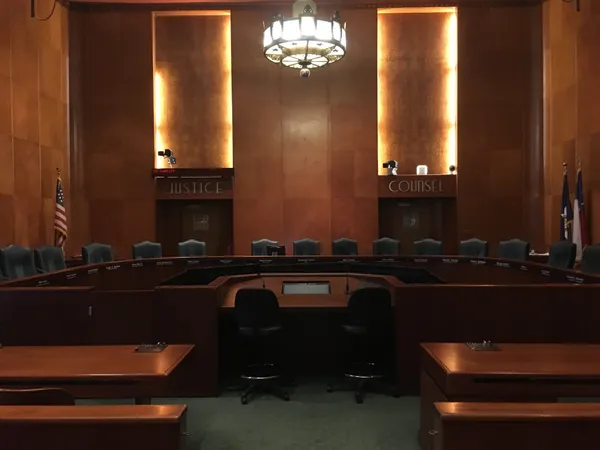
City Hall debate centers on when officers should contact immigration agents during routine policing
Houston City Council members have intensified scrutiny of how city police interact with U.S. Immigration and Customs Enforcement (ICE), as public concern grows over immigration enforcement and as city officials weigh legal constraints under Texas law.
The immediate flashpoint is Houston Police Department (HPD) handling of administrative immigration warrants and detainers that can appear during database checks in routine encounters such as traffic stops. In March 2026, HPD announced updated internal guidelines after reports that officers had, in at least two cases, transported individuals directly to ICE agents—conduct that Mayor John Whitmire said violated department policy and would be corrected.
What changed in HPD’s March 2026 guidance
Under the updated approach announced March 11, 2026, HPD said that when an administrative immigration warrant is identified, a sergeant must respond to verify the information before ICE is contacted. HPD also said ICE agents would have a limited window to arrive at the scene, and that officers will not transport anyone solely on the basis of an administrative immigration warrant.
HPD also disclosed internal metrics: out of roughly 350,000 police reports in 2025, the department said about 220 involved ICE-related matters, and that about half of those individuals were released at the scene. HPD further said 17 people in 2025 were moved to meet ICE at a nearby location, with leadership stating an intent to reduce that number to zero.
How City Council’s pushback fits into the legal landscape
Council members pressing for limits on ICE-related contacts have encountered a central complication: Texas’ 2017 “sanctuary cities” law (SB 4) restricts what local governments may do to limit cooperation with federal immigration enforcement. City legal leadership has warned that attempts to end coordination outright could expose the city to civil and criminal liability under state law.
At the same time, the debate in Houston has not focused solely on whether the city can stop federal enforcement activity. Instead, it has centered on how HPD interprets its obligations when immigration-related hits appear in the National Crime Information Center (NCIC) and related systems used during background checks. In 2025, federal authorities added hundreds of thousands of administrative immigration warrants tied to deportation orders into NCIC, expanding the circumstances in which local agencies could encounter noncriminal immigration information during routine policing.
Key disputed issues at City Hall
Scope of required action: City leaders have argued that when a warrant appears in standard checks, officers must notify the issuing jurisdiction, potentially including ICE.
Operational limits: Police representatives have said officers are not conducting immigration sweeps, describing contacts as a byproduct of mandated database checks during arrests and certain stops.
Public safety consequences: Residents and advocates have raised concerns that fear of immigration consequences could deter reporting of crime or cooperation with investigations.
Houston’s policy debate is narrowing to a practical question: when immigration-related information appears during routine checks, what steps are legally required, and what steps are discretionary?
With HPD’s March 2026 policy adjustment now in place, council attention is expected to remain on implementation—particularly whether the new verification and no-transport rules are consistently followed and how frequently ICE-related database hits arise in day-to-day policing.