Grand Champion lamb brings million-dollar bid at Houston Livestock Show auction, highlighting youth scholarship mission
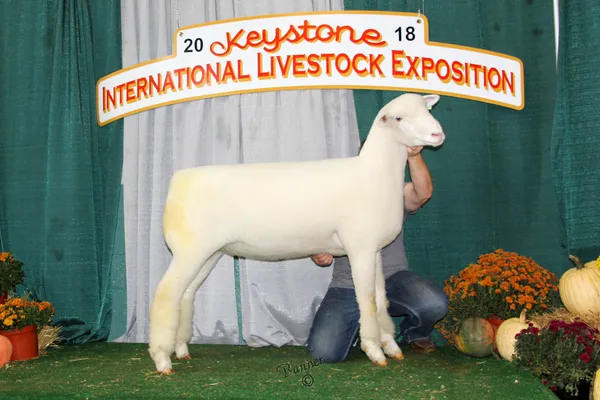
A record-priced lamb in a scholarship-focused marketplace
A Grand Champion market lamb at the Houston Livestock Show and Rodeo’s Junior Market Lamb & Goat Auction commanded a seven-figure bid, turning a youth livestock project into one of the event’s most high-profile financial moments. The sale took place during the annual run at NRG Park, where junior exhibitors from Texas 4-H and FFA programs compete in livestock shows and advance to auctions that typically draw donors willing to pay far above commodity value.
The Junior Market auctions are designed as fundraising mechanisms tied to education support. Rather than functioning like conventional meat or breeding-stock markets, the auction system channels donor spending toward youth development and scholarships while rewarding students for months of animal care, nutrition planning, and show preparation.
How the junior market auctions work
Animals that qualify for junior market auctions do so through judged competitions. Once champions and other placing animals are selected, they are auctioned on a schedule that spans multiple species across the rodeo. For lambs and goats, the auction is one of several major junior market sales alongside steers, barrows, poultry, and school art.
The structure includes established guaranteed premiums by placing, ensuring that exhibitors who reach the auction receive a baseline payment. The final bid price, however, is driven by donor competition, frequently elevating top animals into six-figure territory and, in this case, beyond.
- Junior market auctions are held for several categories, including lambs, goats, steers, barrows, poultry, and school art.
- Exhibitors qualify through show results and are eligible for guaranteed premiums based on placing.
- Final auction prices reflect donor support rather than standard livestock-market pricing.
What a million-dollar lamb sale signals
A million-dollar lamb sale is notable both as a benchmark of donor capacity and as an indicator of how competitive the junior market arena has become. In recent years, the Houston event has repeatedly produced record-setting junior market bids across species, including high-dollar steer sales and escalating totals in small-animal categories such as lamb and goat.
While the top-line bid attracts headlines, the broader significance lies in the underlying financing model: donors bid in a public setting, students receive direct financial benefit through the auction framework and guaranteed premiums, and the rodeo’s education mission is reinforced through the scale of funds raised.
The junior market auctions function less as commodity transactions and more as scholarship-driven fundraising events that reward youth work and community investment.
Context inside the Houston Livestock Show and Rodeo
The Houston Livestock Show and Rodeo is among the nation’s best-known livestock-and-entertainment events, combining professional rodeo competitions and concerts with a large-scale youth livestock program. The junior market auctions are central to that agricultural component, drawing families, volunteers, and donor groups that treat champion sales as both philanthropic commitments and public celebrations of student achievement.
For the exhibitor behind the Grand Champion lamb, the million-dollar result represents the culmination of a long-term project conducted under strict show rules and evaluation standards—an outcome that, at the Houston rodeo, is intended to translate a blue-ribbon performance into educational opportunity.